Theo Hughes · 14 October 2026
Tracing Dependency Management Shifts Within Team-Focused Build Ecosystems for Distributed Engineering Groups
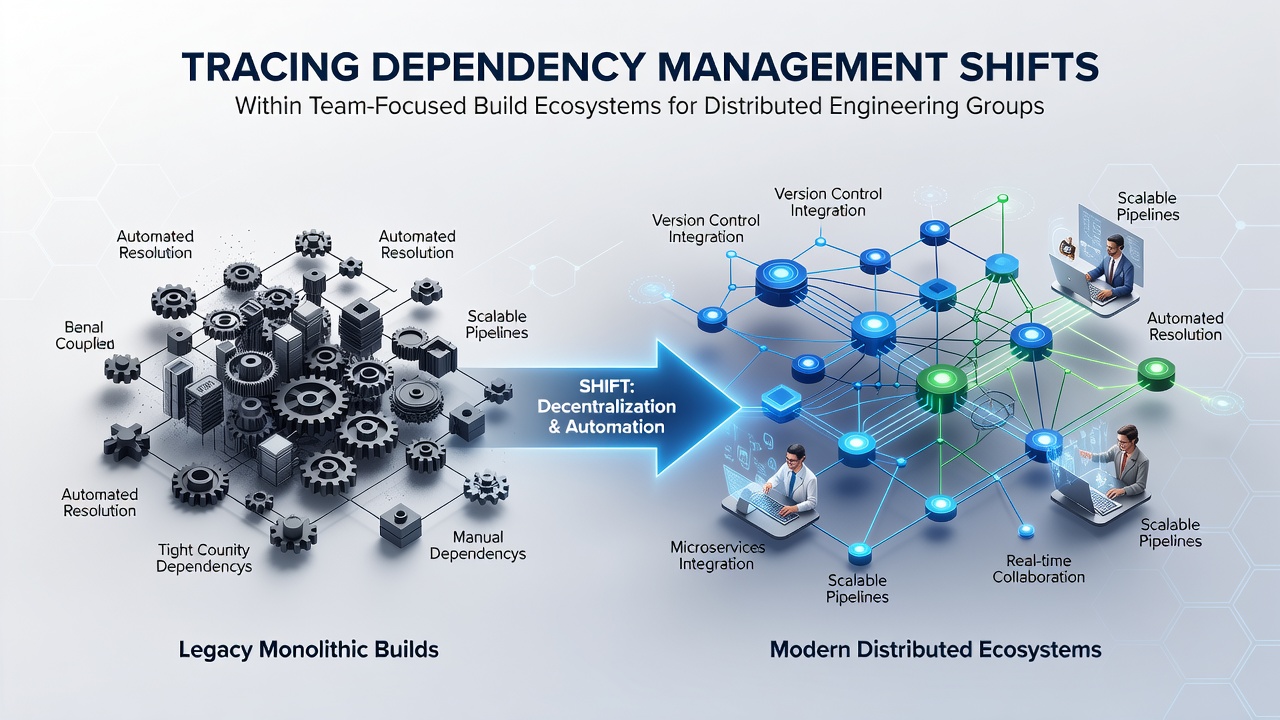
Dependency management has undergone measurable changes in team-focused build ecosystems that support distributed engineering groups, with organizations adopting centralized repositories and automated resolution mechanisms to handle complex package relationships across multiple locations. Data from industry reports shows that teams now integrate tools capable of mapping transitive dependencies in real time, reducing conflicts that previously arose when members worked from separate sites with varying network conditions.
Early Approaches to Build Coordination
Initial systems relied on decentralized package managers that required manual updates from each contributor, yet these methods struggled once engineering groups expanded beyond single offices. Observers note that by the mid-2010s many teams had begun experimenting with monorepo structures because such layouts consolidated dependency declarations into shared files, allowing consistent builds regardless of where individual developers accessed the repository.
Build tools evolved to support incremental compilation and caching layers that recognized changes only in affected modules, which proved essential when latency between sites could otherwise stall full rebuild cycles. Researchers documented that adoption rates for these caching features increased steadily as remote collaboration became standard practice.
Current Patterns in Tool Integration
Modern ecosystems combine version control with dependency graphs that visualize both direct and indirect relationships, giving teams visibility into how updates in one library propagate through the entire project. According to figures from the National Institute of Standards and Technology, software supply chain documentation requirements have driven the inclusion of software bill of materials generation directly into build pipelines since 2023.
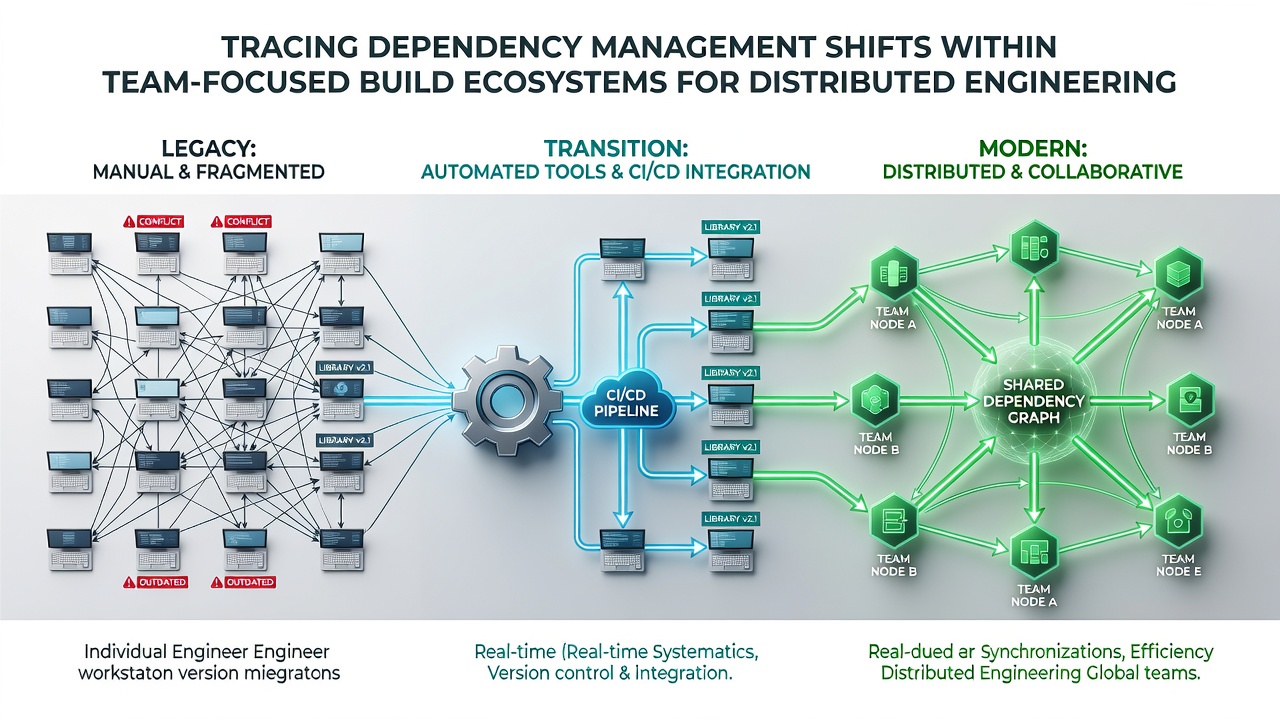
Container orchestration platforms further altered practices by isolating runtime environments, so dependency versions remain locked at build time rather than resolved at deployment. Distributed groups therefore maintain reproducible artifacts even when contributors operate from networks with different default registries or firewall policies.
Security and Compliance Adjustments
Security scanning now occurs at multiple stages within the build process, with automated checks for known vulnerabilities triggered whenever dependency files receive commits. European Union directives on cybersecurity have encouraged organizations to embed vulnerability databases into continuous integration systems, producing alerts that reach all team members simultaneously irrespective of their geographic location.
Studies published by academic institutions in Canada indicate that teams employing these layered scans experienced fewer post-release incidents tied to third-party components, particularly after policies mandated regular audits of transitive dependencies. The shift toward policy-as-code approaches means rules governing acceptable licenses and versions execute automatically during each build, eliminating manual reviews that once delayed releases for distributed contributors.
October 2026 Developments and Future Outlook
In October 2026 several major platforms released updates that standardized dependency pinning formats across languages, enabling cross-tool compatibility that had previously required custom adapters. These changes allow engineering groups to migrate workloads between build systems without rewriting resolution logic, a capability that benefits organizations maintaining hybrid on-premise and cloud infrastructure.
Academic research continues to examine how machine learning models can predict dependency conflicts before they surface in production builds, with early trials showing reduced mean time to resolution when predictions integrate directly into pull request workflows. Teams that have implemented such models report smoother coordination because warnings appear at the point of code review rather than after merge.
Conclusion
Dependency management in team-focused build ecosystems for distributed engineering groups continues to center on automation, visibility, and reproducibility. As platforms incorporate standardized formats and predictive capabilities, the emphasis remains on maintaining consistent outcomes across dispersed contributors while meeting evolving security and compliance expectations.